ATLAS-HUMAN
Human genetics and curated evidence help establish relevance to disease. This layer informs which biological mechanisms warrant testing in adipose tissue and skeletal muscle.

CANARY ATLAS / EVIDENCE
ATLAS-HUMAN and ATLAS-CELL form a shared evidence stack for adipose tissue and skeletal muscle.
ATLAS-HUMAN + ATLAS-CELL
A shared evidence stack for adipose tissue and skeletal muscle.
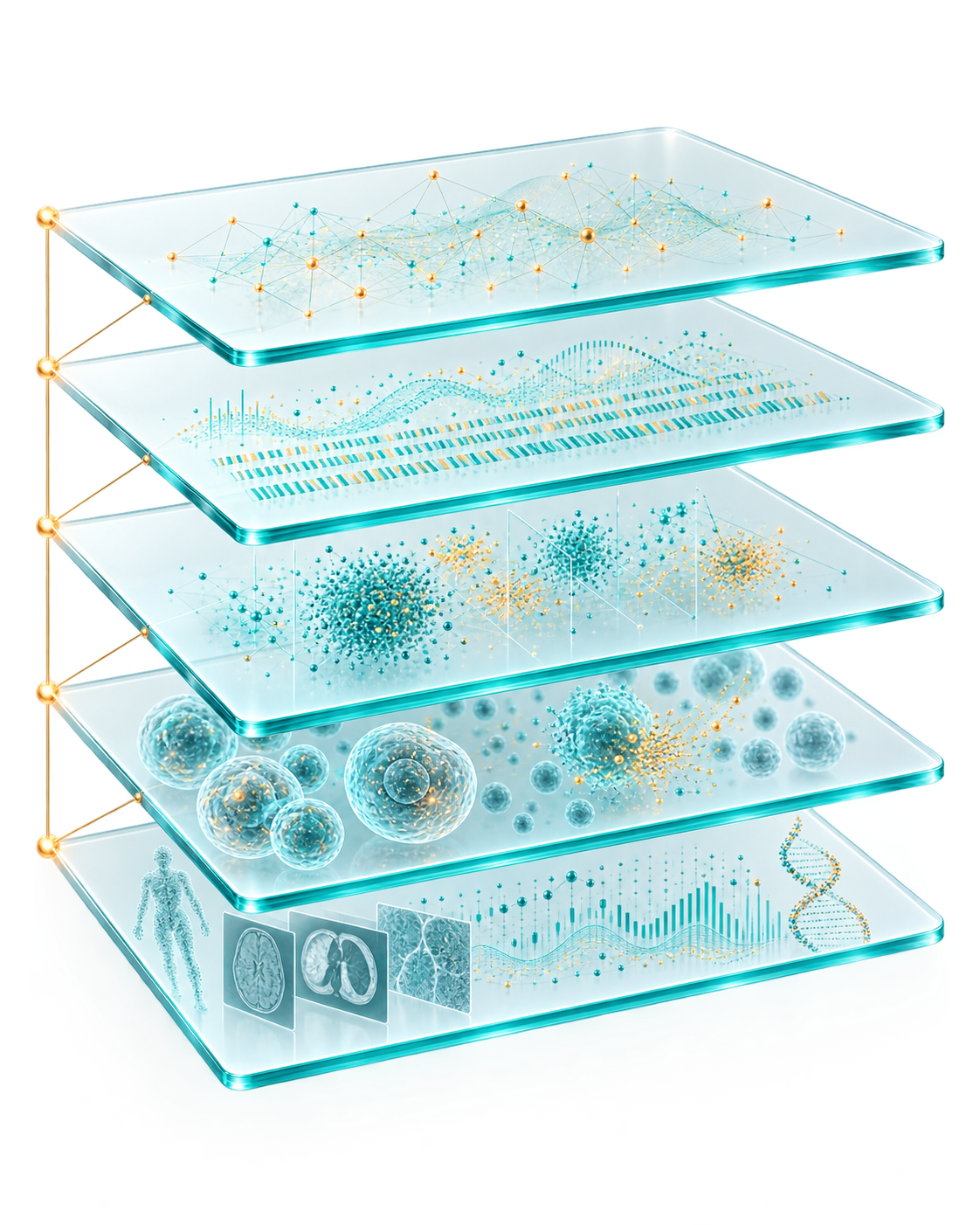
Human relevance and cellular response inform each nomination.
ATLAS-HUMAN + ATLAS-CELL
Human genetics and curated evidence help establish relevance to disease. This layer informs which biological mechanisms warrant testing in adipose tissue and skeletal muscle.
Perturbation and phenotyping examine what changes when target activity is altered. Cellular response is considered alongside human evidence before a target is nominated.
THE EVIDENCE STACK
Human genetics, cell assays, images, and sequences provide complementary views of biology.
Curate, harmonize, and annotate the inputs so their biological context can inform interpretation.
Model adipocyte and muscle states to connect measurements with the tissue biology under study.
Genetics and perturbations support causal hypotheses for testing. Associations alone do not establish that changing a target will produce a therapeutic effect.
Integrate the evidence with delivery criteria, then identify a next experiment for scientist review.
DECISION CRITERIA
Does the available human evidence support the disease mechanism being investigated?
Does changing target activity produce a relevant, measurable cellular response?
Can the intended cargo and tissue be addressed within the HYPER-15™ delivery design?
Atlas is designed to bring these questions together. New experimental measurements update the evidence and guide whether to advance, hold, or reject a hypothesis.
Explore the experimental cycle