RNA medicines designed around the biology of fat and muscle. We unite targeted gene silencing, mRNA protein expression, and AI-guided discovery with HYPER-15™ delivery.
A biotechnology company focused on metabolic function.
Our mission is to develop RNA medicines that address the biology underlying obesity and rare metabolic disease.
Our approach
Canary combines human biological evidence with targeted RNA therapeutics. We study how changes within adipose tissue can influence energy expenditure, body composition, and systemic metabolism.
Delivery from the start
A promising biological target needs a practical way to reach the right cell. Our development model links Canary Atlas AI with HYPER-15™ Active Fusion, so tissue, route, and cargo inform each program from the outset.
A patient-focused objective
We are working toward durable metabolic benefits, preservation of functional lean mass, and dosing schedules that could reduce treatment burden. These objectives guide our preclinical research.
OUR SCIENCE
The biology lives in fat and muscle. So does our focus.
Canary Cure is developing extrahepatic nucleic-acid medicines for obesity, muscle health, and rare metabolic disease.
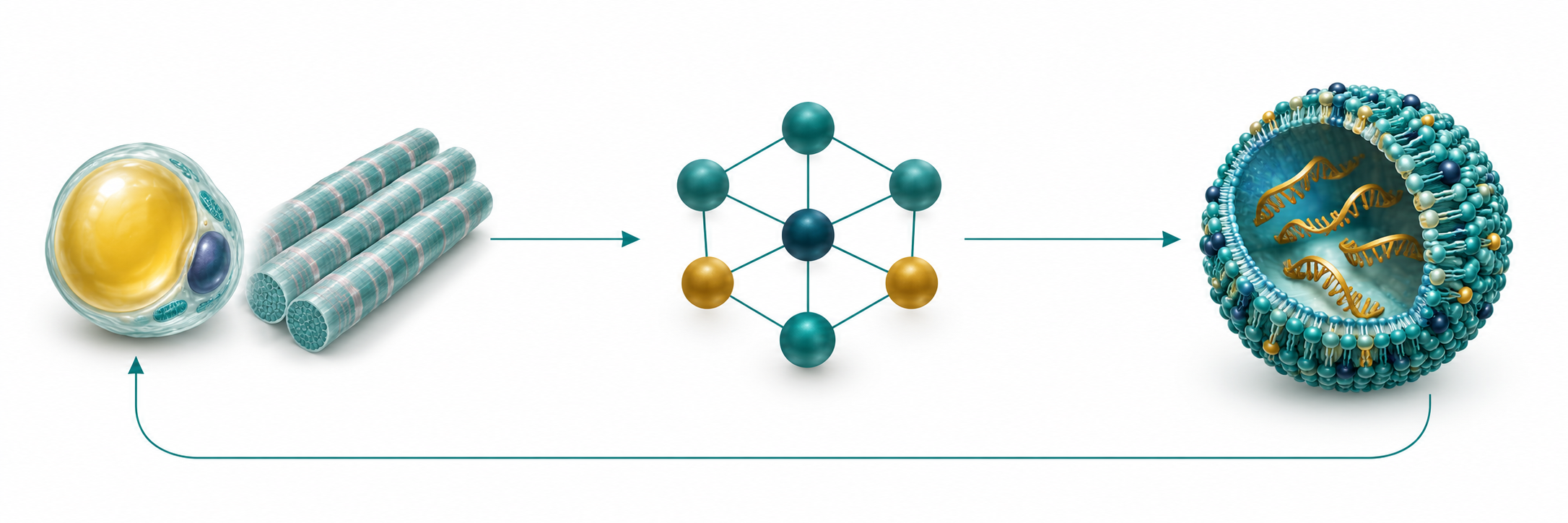
Our approach brings a discovery engine and a delivery platform together. Canary Atlas helps nominate what to test. HYPER-15™ is designed to carry the genetic payload into the cells that matter.
01 Human and cellular evidence02 AI-guided experimental decisions03 Delivery designed for the target tissue
TWO RNA MODALITIES
Different instructions. A shared delivery strategy.
01
siRNA: reduce selected proteins
Small interfering RNA guides the cell’s silencing machinery to a matching messenger RNA. Reducing that message can reduce production of the corresponding protein. Canary’s programs investigate combinations of targets involved in adipocyte function and muscle biology.
02
mRNA: make a therapeutic protein
Messenger RNA provides instructions for a cell to produce a protein. Our fusion-protein designs bring multiple biological activities into an encoded medicine, with tissue delivery and protein exposure evaluated together.
03
Adipose tissue as an active metabolic organ
Fat tissue participates in energy balance and endocrine signaling. Canary investigates the transition from energy storage toward thermogenic activity, with body composition and lean-mass preservation included in program evaluation.
OUR DELIVERY PLATFORM
HYPER-15™ Active Fusion.
One delivery platform. Multiple possibilities.
Plasma-membrane fusion.
Designed to deliver genetic cargo directly into the cell.
HYPER-15™ is a Smart lipid nanoparticle platform being developed for mature adipocytes and skeletal muscle. Its active-fusion design aims to bypass endosomal trapping and support repeat dosing.
Fusion at the membrane
A fusogenic design intended to deposit cargo into the cytosol, where it can act.
Built for chronic use
A self-degrading fusogen is designed to turn over after delivery. Subcutaneous and intramuscular routes are under consideration.
A shared payload bay
The platform is designed to accommodate siRNA, mRNA, and gene-editing nucleic acids, with cargo tailored to each program.
Platform characteristics are design objectives. HYPER-15™-specific tissue preference and duration require experimental validation.
INTENDED TISSUES
Mature adipocytes & skeletal muscle
Extrahepatic delivery is central to the platform’s design.
ROUTES UNDER DEVELOPMENT
Subcutaneous & intramuscular
Route and composition work together to support the intended tissue.
PAYLOAD FLEXIBILITY
siRNA, mRNA & gene-editing cargo
A common delivery framework for distinct nucleic-acid programs.
CANARY ATLAS AI
EVIDENCE INTO EXPERIMENT
Intelligence with an experimental next step.
Canary Atlas connects human biology, cellular evidence, and AI reasoning with the realities of delivery.
Our discovery engine is designed to rank hypotheses, track uncertainty, and identify the next test. Scientists review each decision, and new measurements inform the next cycle.
Human genetics and curated literature establish relevance to disease and help prioritize hypotheses.
ATLAS-CELL
Perturbation studies, cellular measurements, and phenotyping test how adipocytes and muscle respond.
Scientific review
Scientists review the evidence, uncertainty, and delivery requirements before selecting the next experiment. Each cycle records the decision and its outcome.
“AI without enabling technology is just a list.”Raj Reddy CEO, Canary Cure Therapeutics
Two fusion-protein motifs: an amylin backbone and a second FGF21 backbone designed for liver bias. Four agonist activities, including GLP-1/incretin signaling, are intended to drive weight loss with fewer side effects and an ultra-long 28-day dosing interval.
Your body makes the medicine.
28-day dosing targetNext: expression and exposure studies for both motifs
Program details
Two distinct fusion motifs
The amylin-backbone motif and the FGF21-backbone motif for liver bias are evaluated as separate designs. Subcutaneous adipose delivery is intended to support local protein production and systemic activity.
Development priorities
Expression of the intact fusion protein, exposure over time, and activity of the intended agonist components.
CCT-217
Development
Energy expenditure
Dual or triple siRNA
An adipose program designed to increase energy expenditure and support weight loss while preserving lean mass.
Twice-yearly dosing targetNext: IND-enabling in vivo studies
Program details
Adipose reprogramming
CCT-217 investigates thermogenesis and adipose energy expenditure through combined gene silencing. The development objective includes fat loss with lean-mass preservation.
Development priorities
Transcript and protein changes in the intended tissue, body composition, lean mass, and energy expenditure in IND-enabling studies.
CCT1117
Discovery / development
Muscle health
Dual siRNA
Combining myostatin silencing with CCT1117 to investigate muscle size, specific force, and mitochondrial quality.
Twice-yearly dosing targetNext: force and respiration studies
Program details
Beyond muscle size
The program combines myostatin siRNA with CCT1117 siRNA to investigate muscle function and mitochondrial quality. The combination must demonstrate benefit beyond myostatin silencing alone.
Development priorities
Specific force and ADP-stimulated respiration, alongside muscle size and tissue pharmacology.
CCT-987
Development
Metabolic Restoration for Prader Willi Disease
Multimodal siRNA / mRNA
Investigating functional adipose rescue and metabolic restoration for Prader Willi disease, rare pediatric obesity, and related metabolic disease.
Rare-disease development pathNext: IND-enabling in vivo studies
Program details
Metabolic restoration in Prader Willi disease
The program targets peripheral adipose biology. Canary’s published approach combines CB1R siRNA with leptin mRNA to investigate restoration of adipose function and metabolic signaling.
Development priorities
Cell-resolved expression, functional adipose measurements, and an IND-enabling in vivo package.
Programs are investigational. Dosing intervals and intended benefits are development targets, not demonstrated human outcomes. Development stages reflect the October 2026 company overview.
LEADERSHIP & SCIENTIFIC ADVISORS
Our team.
With global industry experience, our team values collaboration, shares a passion for finding solutions to life’s biggest challenges and a desire to unlock the power of RNA therapy to transform healthcare for all.
Raj Reddy
President and CEO, Founder
View details about Raj Reddy
Raj leads Canary’s work in RNA therapeutics and metabolic disease, drawing on experience in biotech development and company leadership.
Anna Wang
Chief Strategy Officer, Co-Founder
View details about Anna Wang
Anna brings global health, partnership development, and drug and medical device experience to Canary’s strategy.
Dr. Michael Lincoff, MD
Chief Clinical Officer
View details about Dr. Michael Lincoff, MD
An interventional cardiologist and SELECT trial co-chair, Dr. Lincoff brings expertise in obesity and cardiovascular clinical research.
Amit Jolly
SVP, Capital Strategy & Investor Partnerships
View details about Amit Jolly
Amit leads financing strategy and investor partnerships, with a background in biotech investment and company building.
Dr. Paul Cohen, MD, PhD
Senior Scientific & Medical advisor, Molecular Metabolism
View details about Dr. Paul Cohen, MD, PhD
Dr. Cohen studies adipose biology and the molecular controls of fat-cell function at Rockefeller University.
Dr. Pierre Rosenzweig, MD
Senior Clinical Development advisor, Obesity & Metabolic Disorder
View details about Dr. Pierre Rosenzweig, MD
Dr. Rosenzweig is a clinical pharmacologist with experience developing obesity therapies and studying metabolic syndrome.